
Memory Care at Home
A dementia diagnosis changes the questions a family asks. It stops being about whether help is needed and becomes about how to give it well.
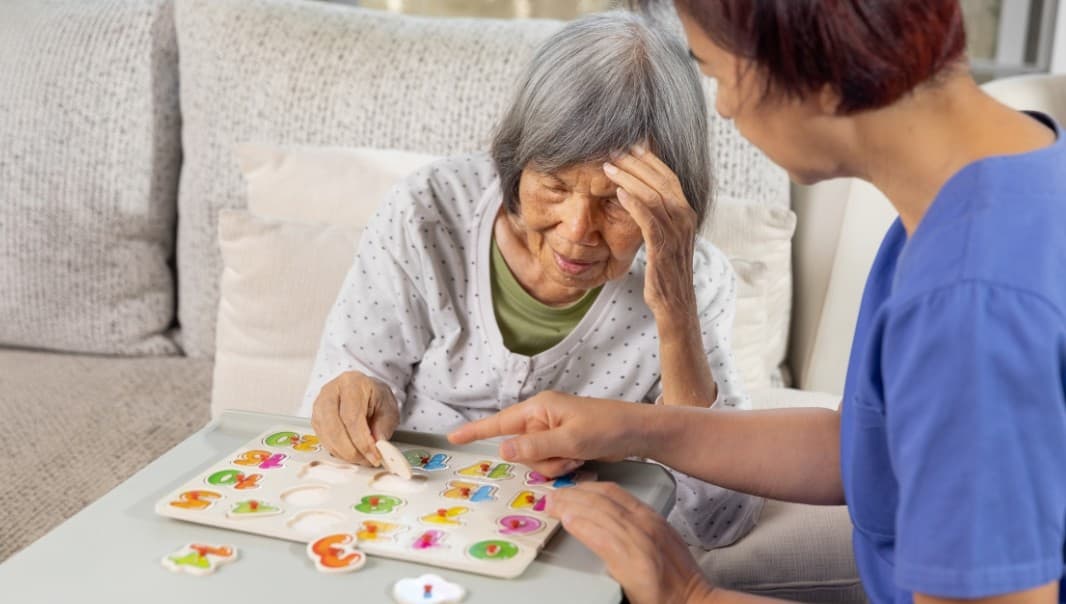
Memory care at home means keeping your loved one in the surroundings they know, with people who understand what they are experiencing. Familiarity does a great deal of work in dementia care. The same rooms, the same chair, the same view from the window, all of it reduces the confusion that comes with change.
Why home often works better
Moving someone with dementia into an unfamiliar environment can accelerate confusion and distress. At home, the environment is already learned. Your loved one knows where the bathroom is. They know which chair is theirs.
That does not mean home is always the right answer, and we will tell you honestly if we think a community would serve your family better. But where staying home is possible, it is usually worth protecting.
The moments families find hardest
Most families do not struggle with the diagnosis itself. They struggle with specific moments. These are the ones we are asked about most.
"She asks me the same question over and over."
Repetition comes from the anxiety of not remembering, not from not listening. Our caregivers are trained to answer calmly each time rather than correcting or reminding, because the reassurance is what is actually being sought.
"He becomes agitated in the late afternoon."
Late-day agitation, often called sundowning, is common. We work with routine, light, activity levels and quieter afternoons to reduce it, and we track what triggers it for your loved one specifically.
"She refuses help with washing."
Resistance to personal care is usually about dignity and feeling exposed, not about hygiene. Approach matters enormously. Our caregivers are trained to go slowly, offer choices, preserve privacy and step back rather than escalate.
"He gets up and tries to leave."
Wandering is frightening for families. We focus on structure, supervision, meaningful daytime activity and practical safety around the home, and we work with you on the specifics of your property.
"She thinks I'm her sister."
Being unrecognised is painful. We do not train caregivers to correct or argue, because that rarely helps and often distresses. We meet the person where they are, and we support families to do the same.
How routine helps
Predictability is one of the most effective tools in dementia care. When the day follows a familiar shape, there is less to work out and less to become anxious about.
We build a consistent daily rhythm around meals, washing, rest and activity, keeping the pattern steady even when the caregiver changes. We aim for the same small team so your loved one sees familiar faces, and we keep activities matched to current ability so they bring enjoyment rather than frustration.
When clinical needs are part of the picture
Dementia rarely arrives alone. There is often diabetes, heart medication, or a wound that needs attention.
Because we have an in-house registered nurse, we can combine memory care with nurse-delegated care, so medication administration, insulin and similar tasks are handled under proper supervision. Families do not need one agency for companionship and another for clinical support.
Support for you, not only for them
Caring for someone with dementia is relentless in a way that is hard to explain to people who have not done it. Grief and exhaustion arrive together, and often before any actual loss.
Many of our memory care families start with respite care, a few hours a week that let them sleep, see friends, or simply be somewhere else for a while. That is not a failure of devotion. It is what makes long-term caring sustainable.
What the first two weeks look like
The beginning matters more in dementia care than in any other kind, because a new person in the home is exactly the sort of change that causes distress.
Before we start, we sit down with you and learn the person rather than the diagnosis. What they did for work. Who is in the photographs. What music they like. What time of day is hardest. What words to avoid. Which subjects settle them and which do not.
The first visits are short and low-demand. The aim is familiarity, not productivity. The caregiver is there to become a known face before taking on personal care.
We build up gradually. Tasks are introduced as trust forms, in the order that causes the least resistance.
We adjust openly. If something is not working, we change it and tell you why. You know your parent better than we do, and the plan should reflect that.
Areas we serve
Kirkland, Redmond, Bellevue, Bothell, Kenmore, Woodinville, Seattle, serving all of King County. Call 425-541-8281 to check your area.
Free Consultation
Talk to someone who understands dementia care.
A free consultation, no obligation, and honest guidance about whether care at home is right for your family.
Frequently Asked Questions
What is in-home memory care?
In-home memory care is specialized support for seniors living with Alzheimer's, dementia, and other memory-related conditions, provided in the comfort of their own home. At Veritas it includes daily structure and routine, engaging activities, safety-focused care, and patient, compassionate companionship.
Do you provide in-home care for Alzheimer's and dementia?
Yes. We provide person-centered care for seniors living with Alzheimer's and dementia at home. Care focuses on familiar routines, safety, gentle engagement, and dignity, and it adapts as needs change over time.
Is it better to keep someone with dementia at home?
Many families prefer to keep a loved one with dementia in familiar surroundings, which can reduce confusion and distress. In-home memory care makes that possible with trained caregivers and a safe daily routine. During a free consultation we will help you weigh what is right for your family.
How are your caregivers trained for memory care?
Our caregivers are selected and trained to support memory-related conditions with patience and skill, using routine, redirection, and calm engagement. We match caregivers thoughtfully so your loved one sees familiar, consistent faces.
How do you keep someone with memory loss safe at home?
We build a safety-focused plan that includes supervision, consistent routines, help with daily tasks, and attention to wandering and household hazards. Where clinical needs exist, our nurse-delegated care adds registered-nurse oversight.
How quickly can memory care begin?
It starts with a free consultation, usually within 24 hours of reaching out. After we create a personalized care plan, care often begins within a few days.
Which areas do you serve for memory care?
We serve families across Greater Seattle and King County, including Kirkland, Redmond, Bellevue, Bothell, Kenmore, Woodinville, Seattle, and Issaquah. Call 425-541-8281 to check your area.